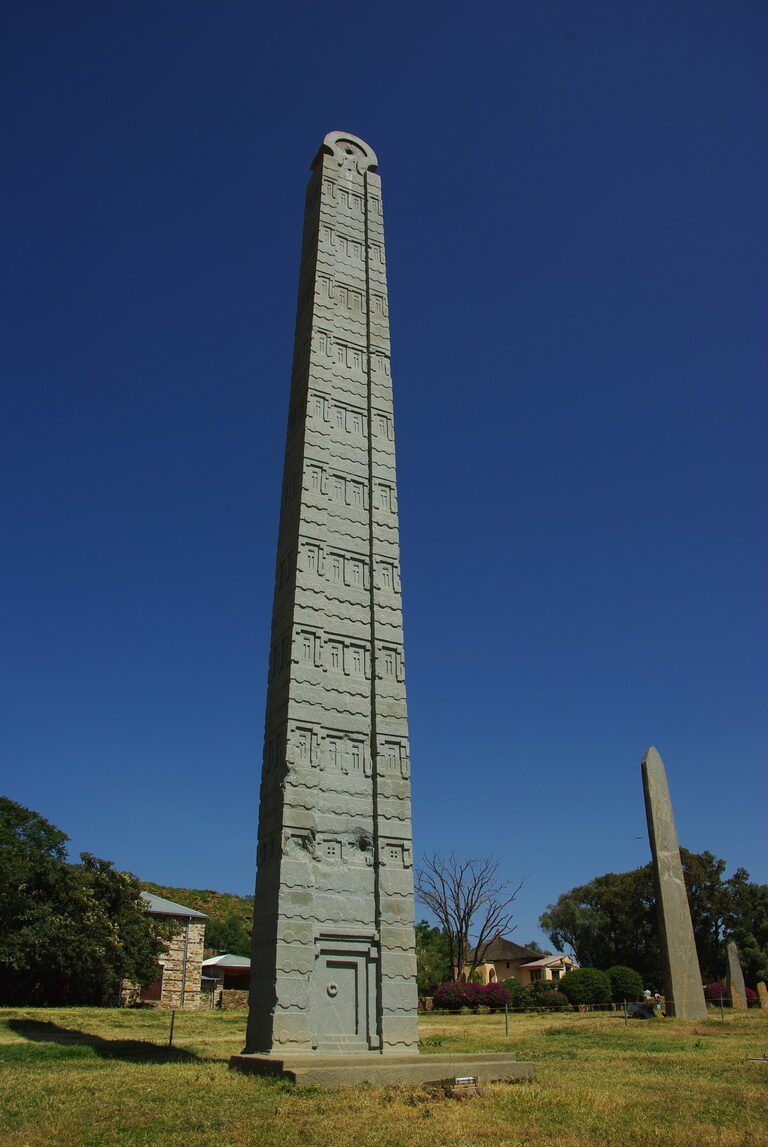
Home to eleven medieval monolithic rock-hewn churches carved from solid rock in the 12th century, Lalibela is one of Ethiopia’s holiest cities and a UNESCO World Heritage Site that continues to serve as a living pilgrimage destination.
Quick facts
| Best time | September – March |
|---|---|
| Currency | Ethiopian Birr (ETB) |
| Language | Amharic |
| Timezone | GMT+3 |
Highlights
- Rock-Hewn Churches
- Bet Giyorgis (Church of St. George)
- Ancient Religious Ceremonies
- Traditional Coffee Ceremonies
The Rock-Hewn Churches of Lalibela
Commissioned by King Lalibela in the 12th and 13th centuries to create a “New Jerusalem,” the churches were hewn entirely from single blocks of stone and connected by a labyrinth of tunnels, trenches and hidden passageways. The cross-shaped Bete Giyorgis (Church of St George) is the most famous, but each church has its own atmosphere, frescoes and sacred treasures.
A UNESCO World Heritage Site, Lalibela is best explored over one to two days with a knowledgeable guide who can unlock the history and living rituals behind the stone. Many travellers combine it with Gondar, Axum and the Simien Mountains on a northern historic circuit.
Visiting during a major festival — especially Genna (Ethiopian Christmas) on 7 January — is unforgettable, as tens of thousands of pilgrims gather for all-night ceremonies.